Authorized Dealer
The XYZprinting Grades K-5 STEAM Curriculum: One Lesson is designed to deliver an engaging STEAM-based lesson, using child-friendly 3D software and 3D printers. Created using Next Generation Science Standards (NGSS),…
€4,750.00
Save €250.00
Product highlights and buying context
The XYZprinting Grades K-5 STEAM Curriculum: One Lesson is designed to deliver an engaging STEAM-based lesson, using child-friendly 3D software and 3D printers. Created using Next Generation Science Standards (NGSS), the lesson can be mixed with existing school curricula or used as a standalone lesson. The curriculum has an emphasis on teaching 3D design principles and encourages collaborative learning and problem-solving skills.
Please note that you will have access toonlyone lesson plan from the curriculum topics listed below.
Students will learn about the basic operations of arithmetic, such as addition, subtraction, multiplication, and division.
Students will design their own clocks and use them to calculate time equations.
Students will create a paper tangram and replicate it in 3D to learn about the spatial relationships between objects without using a formula. Students will also trace their tangram creations and color them in, merging their skills to gain a deeper understanding of the geometrical principles seen in everyday life.
Students will learn about art and geometrical symmetry by creating spirograph drawings on the computer, by 3D printing, and by hand drawing. By using these three techniques, students will learn about rotational and mirror symmetry.
Students will plan and design a concept car and use it to deepen their understanding of how gears work in mechanical devices.
Students will learn about our solar system and the distances between planets by assembling a solar system model.
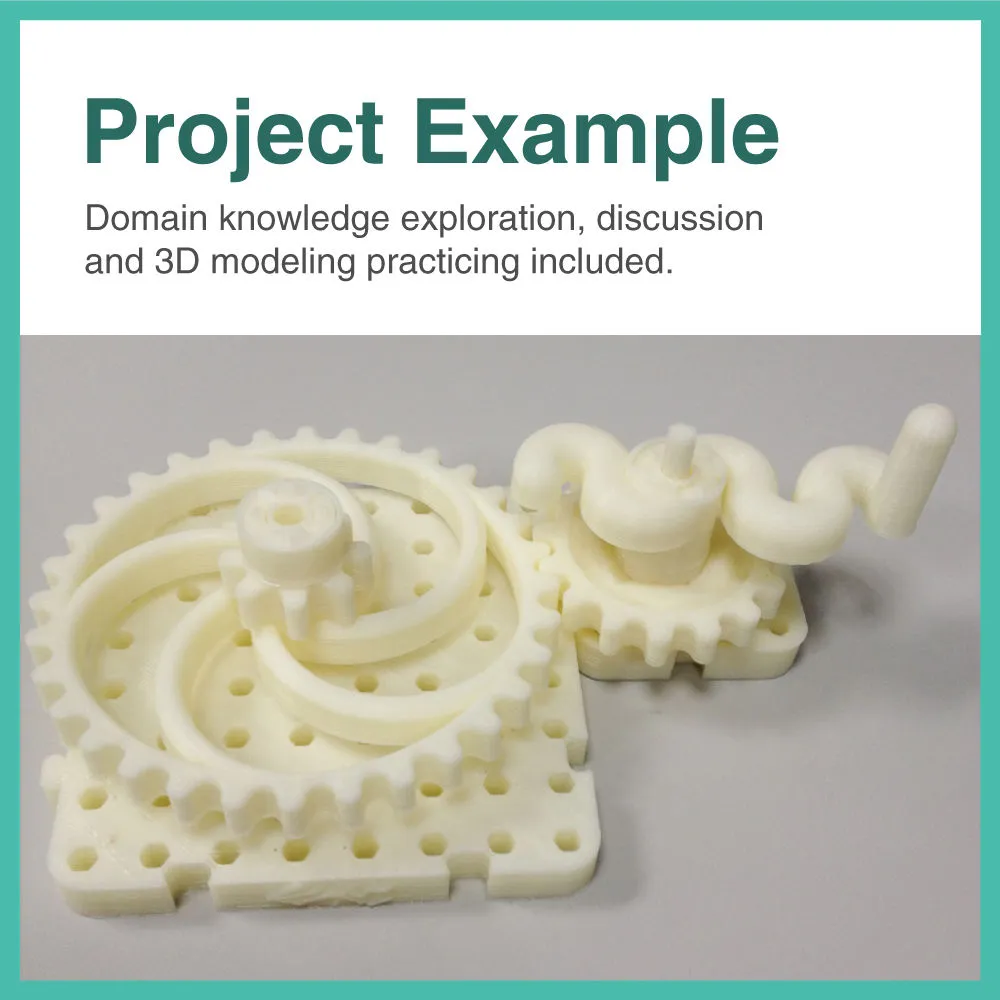
Students will learn how gears work in mechanical devices by designing and creating their own 3D printed gear set.
This lesson will help students explore and create platonic solids.
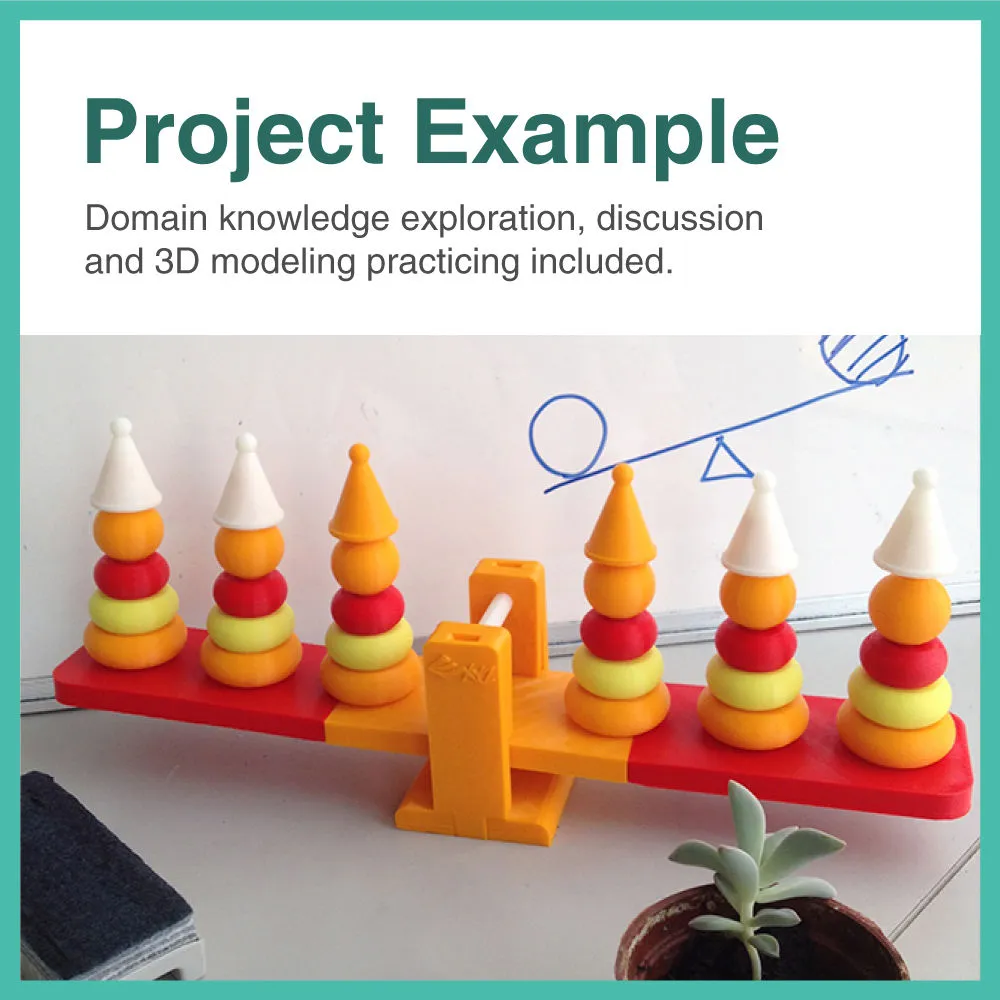
Students will learn how to describe measurable objects, such as weight and length, and plan a concept model. They will create a lever prototype using 3D modeling software and 3D printers.
Students will be issued a challenge to create an extremely long penny drop. Using several physical constraints, students will learn the practical applications of the Pythagorean formula. They will design and 3D print a maze to compete against other student groups.
Additional Details
Loading…