Authorized Dealer
This filter is especially valuable to nature and portrait photographers who need control over their depth of field. For the nature shooter, the Multistop Fader will allow you to make longer exposures to create blurs…
Product highlights and buying context
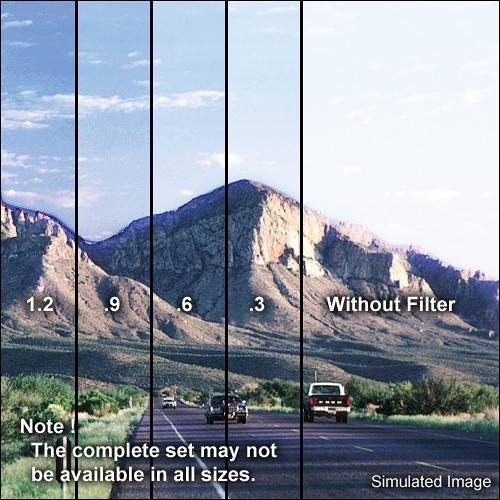
This filter is especially valuable to nature and portrait photographers who need control over their depth of field. For the nature shooter, the Multistop Fader will allow you to make longer exposures to create blurs such as when shooting city traffic or waterfalls where you want to capture the motion of the water rather than a dull static shot. Portrait shooters will appreciate this filter since it will give you the freedom to shoot at wider apertures in order to separate your subject from the background - again, when shooting with fast ISOs under bright lighting conditions.
The outer ring of the filter is indexed with reference points that can be used to judge stops. These marking also show minimum and maximum stop loss points. The outer ring is also wider than the rear thread ring and this is deliberate in order to avoid any chance of vignetting (the darkening of the corners of an image).
Formatt filters are manufactured through their proprietary system of Absorbing Cell Technology (A.C.T.) where the CR39 resin is manufactured, color added and then sandwiched between two sheets of high-quality Schott glass. In this way, the color of the filter can be evenly produced, controlled and protected by the glass. This makes it possible to change filters in the middle of a shoot and be assured of color and quality consistency. Edging is perfected through a water jet cutting machine that maintains the highest possible standard for each filter that comes off the assembly line.
The Multistop Fader is made by Formatt, an English company with a 50 year reputation for producing quality filters for film and MPTV.
Manufactured from Queens Award winning CR39 dyed substrate - The resin is cured within the glass using Formatt's bonding process which has been developed over a number of years to eliminate reaction with either the glass or the resin
This process absorbs the color or effect into each cell of the resin rather than coating onto it, ensuring that the color is applied consistently across the filter. This means that each Formatt filter is of the same type can be consistently replicated time after time
Additional Details
Loading…
