Authorized Dealer
How to Use ND Filters: An Introduction Read More This 10-stop, 4 x 12" Kodak #96 Wratten 2 Optical Gel ND Filter creates a darkening of the entire image, allowing you to photograph with a wider aperture or slower…
Product highlights and buying context
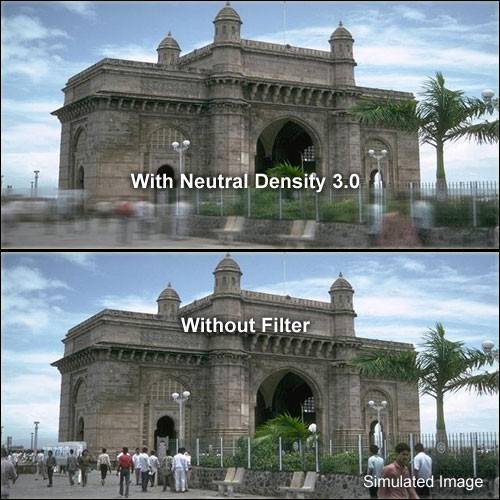
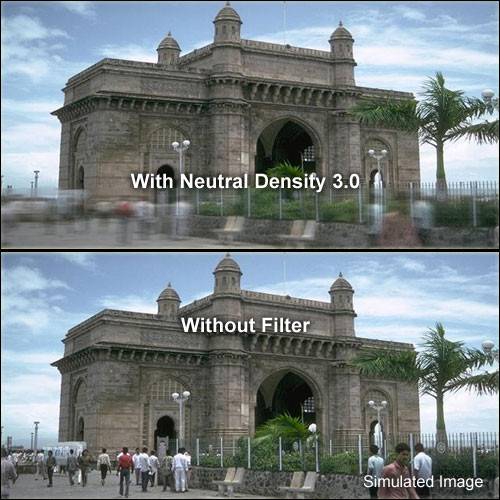
This 10-stop, 4 x 12" Kodak #96 Wratten 2 Optical Gel ND Filter creates a darkening of the entire image, allowing you to photograph with a wider aperture or slower shutter speed without overexposing your image. By slowing your exposure time, you can create motion blur for special effects or to convey a sense of movement. Opening your iris allows you to create shallow depth of field, which can help isolate your subject. Neutral density filters do not affect the coloration of the image and are ideal for pairing with other filters.
Kodak Wratten 2 gelatin filters are more durable than the previous Wratten series filters. This filter can withstand temperatures up to 122°F, and features a polyurethane top coat for increased usable life. When not in use, the filter should be stored flat and in a cool (78°F), dark, and low-humidity environment with less than 50% relative humidity.
Carbon Neutral Density Filters are used to reduce the intensity of light by a definite ratio, without affecting the tonal rendition of colors; improves neutrality in the UV and IR fields
To enable slow shutter speeds to be used, especially with high speed films, to record movement in subjects such as waterfalls, clouds, or cars
To decrease depth of field by allowing wider apertures to be used, which helps separate subjects from their background
To decrease the effective ISO of high speed film (above ISO 400) and allow it to be used outdoors in bright situations
To allow cine and video cameras (which have fixed shutter speeds) to film subjects such as snow, sand or other bright scenes which could cause overexposure
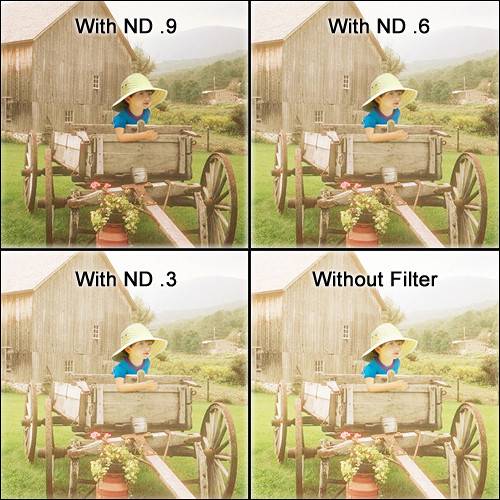
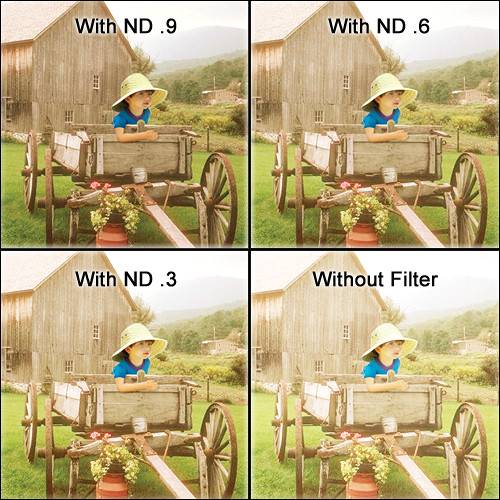
ND.3 (exposure adjustment = 1 stop, reduces ISO 1/2)
ND.6 (exposure adjustment = 2 stops, reduces ISO 1/4)
ND.9 (exposure adjustment = 3 stops, reduces ISO 1/8)
ND 1.8 (exposure adjustment = approx. 6 stops, transmits 1% of light,)
ND 3.0 (exposure adjustment = 10 stops, transmits 0.1% of light)
ND 4.0 (exposure adjustment = 13-2/3 stops, transmits 0.01% of light)
ND 6.0 = (exposure adjustment = approx. 20 stops)
Additional Details
Loading…